Similar to 木 (tree), with an extra line at the top. Depicts the top end of a tree.
Character Evolution

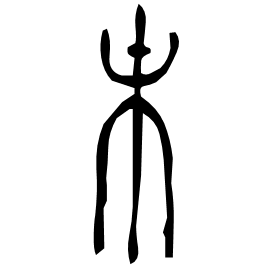
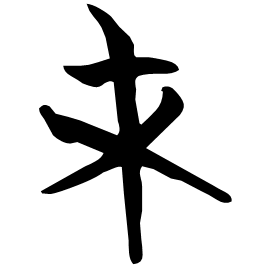

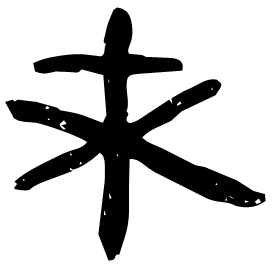
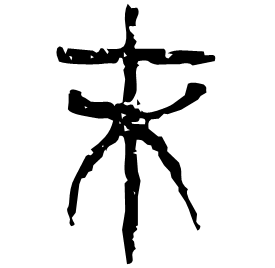
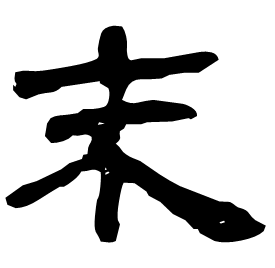
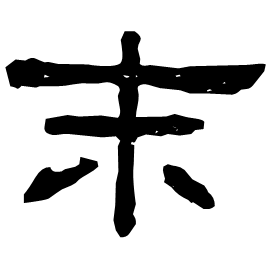

Component uses
Historical Pronunciations
| Middle Chinese | Old Chinese | Gloss | |
|---|---|---|---|
| Baxter-Sagart | mat | mˤat | end of a branch |
說文解字
《說文》:“末,木上曰末。从木,一在其上。”
Sources
- Character origin
- 漢語多功能字庫
- Readings & variants
- Unicode
- Historical pronunciations
- Baxter-Sagart
- Historical images
- Academia Sinica
- Etymology
- Shuowen Jiezi (說文解字)
Original meaning: armless child
Pictograph of a young child, similar to 子, but without arms. Compare to 孑 (child only with right arm) and 孓 (child only with left arm). The current meaning is a phonetic loan.
Components
Character Evolution


Component uses
Historical Pronunciations
| Middle Chinese | Old Chinese | |
|---|---|---|
| Zhengzhang | reːwʔ | |
| Unicode | leǔ | |
| leǔ |
說文解字
《說文》:“了,尦也。从子無臂,象形。”
Sources
- Character origin
- 季旭昇《說文新證》p.972
- Readings & variants
- Unicode
- Historical pronunciations
- Zhengzhang Shangfang
- Historical images
- Academia Sinica
- Etymology
- Shuowen Jiezi (說文解字)