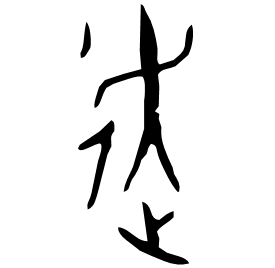
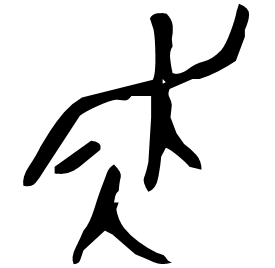
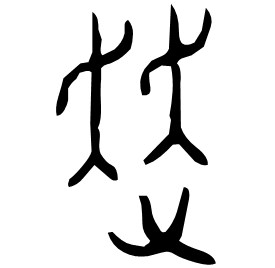
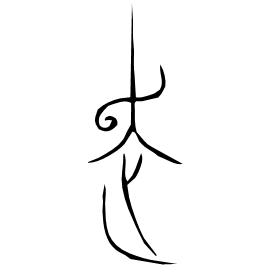
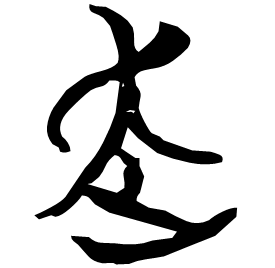
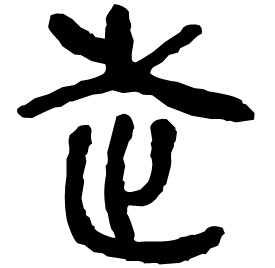
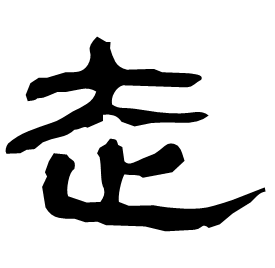
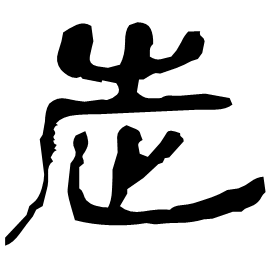
Originally written as 夭, depicting a person swaying their arms (夭) while walking quickly. The foot component 止 was added later.
Components
Character Evolution




Component uses
Historical Pronunciations
| Middle Chinese | Old Chinese | Gloss | |
|---|---|---|---|
| Baxter-Sagart | tsuwX | [ts]ˤoʔ | run |
說文解字
《說文》:“走,趨也。从夭、止,夭止者,屈也。”
Sources
- Character origin
- 季旭昇《說文新證》p.108漢語多功能字庫
- Readings & variants
- Unicode
- Historical pronunciations
- Baxter-Sagart
- Historical images
- Academia Sinica
- Etymology
- Shuowen Jiezi (說文解字)
Components
Character Evolution



Component uses
Historical Pronunciations
| Middle Chinese | Old Chinese | Gloss | |
|---|---|---|---|
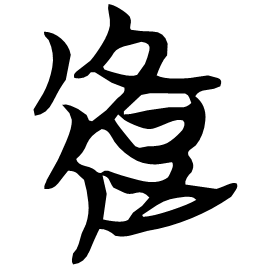
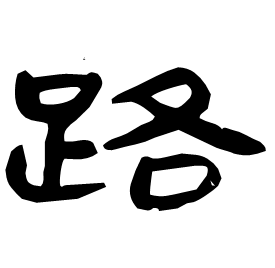
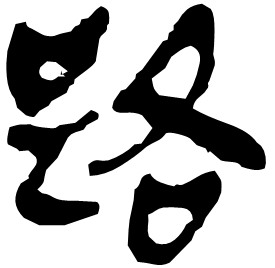
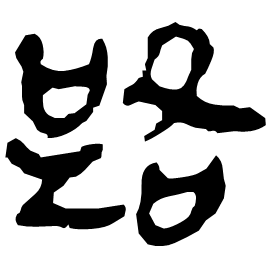
| Baxter-Sagart | luH | Cə.rˤak-s | road |
說文解字
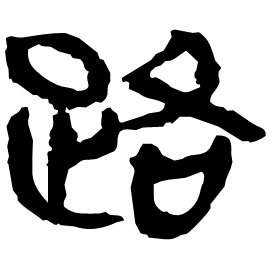
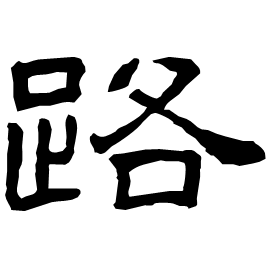
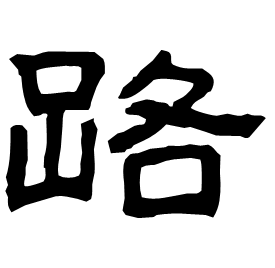
《說文》:“路,道也。从足,从各。”
Sources
- Character origin
- 漢語多功能字庫
- Readings & variants
- Unicode
- Historical pronunciations
- Baxter-Sagart
- Historical images
- Academia Sinica
- Etymology
- Shuowen Jiezi (說文解字)
Traditional
Original meaning: outer door
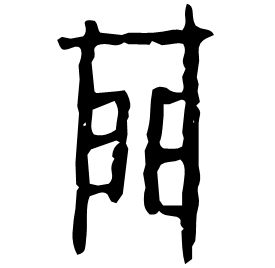
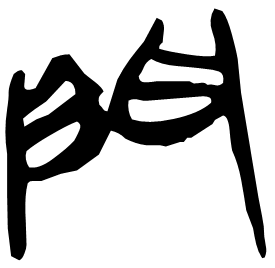
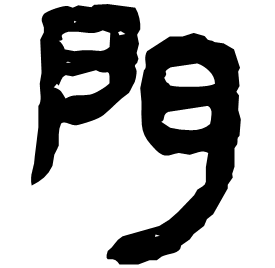
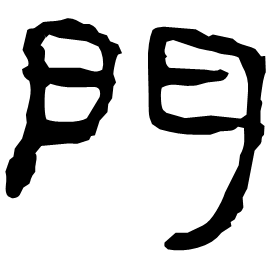
Pictograph of a gate.
Character Evolution




Component uses
Historical Pronunciations
| Middle Chinese | Old Chinese | Gloss | |
|---|---|---|---|
| Baxter-Sagart | mwon | mˤə[r] | gate, door |
說文解字
《說文》:“門,聞也。从二戶,象形。”
Sources
- Readings & variants
- Unicode
- Historical pronunciations
- Baxter-Sagart
- Historical images
- Academia Sinica
- Etymology
- Shuowen Jiezi (說文解字)