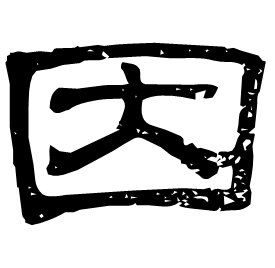
因
yīn HSK2

cause

← Back to history
rejected by alexxx · Oct 24, 2026, 10:14 AM · Reviewed by Prismcool on Oct 24, 2026, 05:42 PM

Fixed ethymology according to Shuowen.

Review: 因 did not arouse from a semantic expansion. The current usage of the graph is a phonetic loan. As for the graphical explanation, it indeed does also depict a person (大) on a mat (囗) but you need to find a recent source that can prove this explanation.

Changed fields: hint, originalMeaning, components

Original meaning: To approach / to rely upon.

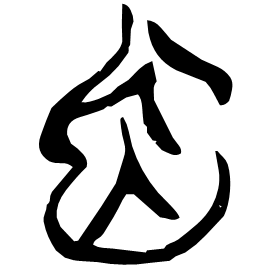
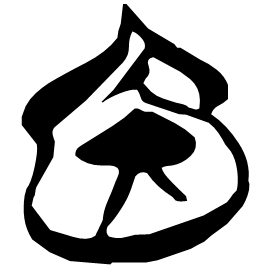
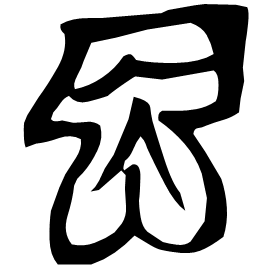
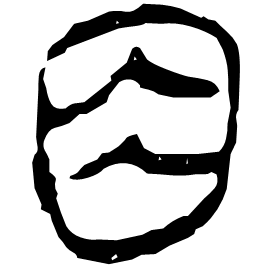
Originally depicted a person (大) lying on a mattress or straw mat (囗), now written as 裀 or 茵. The current meaning of 'cause/reason' is a metaphorical extension of 'that upon which one relies'.

Components

囗
囗 Iconic component

Depicts a matress/straw mat.

大
大 Iconic component

Depicts a person.


Character Evolution

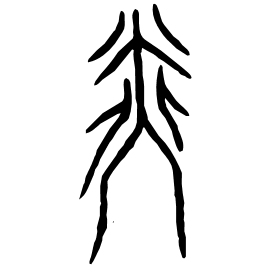
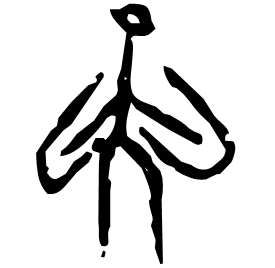
Oracle form
Oracle Bone ~1250-1000 BC
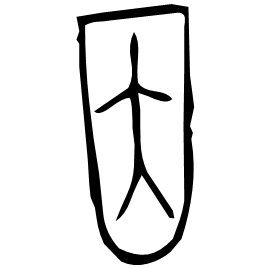
Oracle form
Oracle Bone ~1250-1000 BC
Oracle form
Oracle Bone ~1250-1000 BC
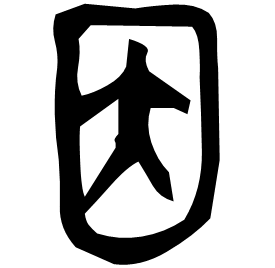
Bronze form
Bronze Mid Western Zhou ~900 BC
Bronze form
Bronze Mid Warring States ~300 BC
Bronze form
Bronze Late Warring States ~250 BC
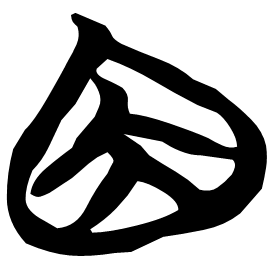
Seal form
Seal Warring States (Chu) 475-221 BC
Seal form
Seal Warring States (Chu) 475-221 BC
Seal form
Seal Warring States (Chu) 475-221 BC
Seal form
Seal Warring States (Chu) 475-221 BC
Seal form
Seal Shuowen ~100 AD
Clerical form
Clerical Qin 221-206 BC
Clerical form
Clerical Western Han 202 BC-9 AD
Clerical form
Clerical Eastern Han 25-220 AD
Clerical form
Clerical Eastern Han 25-220 AD
Regular Modern

Historical Pronunciations

Middle ChineseOld ChineseGloss
Baxter-Sagart'jinʔi[n] rely on

說文解字

《說文》:“因,就也。从囗、大。”

Sources

Character origin
季旭昇《說文新證》p.518漢語多功能字庫
Readings & variants
Unicode
Historical pronunciations
Baxter-Sagart
Historical images
Academia Sinica