
Original meaning: urinate
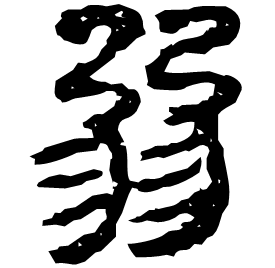
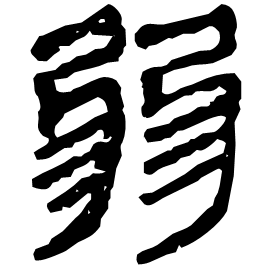
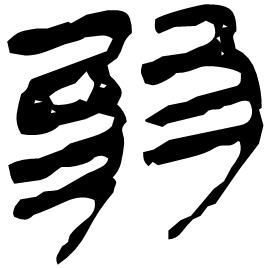
Depicts two people urinating (尿). Based on the original meaning "urinate", now written as 尿/溺. The current meaning is a phonetic loan.
Components
Character Evolution


Component uses
Historical Pronunciations
| Middle Chinese | Old Chinese | Gloss | |
|---|---|---|---|
| Baxter-Sagart | nyak | newk | weak |
說文解字
《說文》:“弱,橈也,上象橈曲,彡象毛氂橈弱也。弱物并,故从二。”
Sources
- Character origin
- 季旭昇《說文新證》p.705
- Readings & variants
- Unicode
- Historical pronunciations
- Baxter-Sagart
- Historical images
- Academia Sinica
- Etymology
- Shuowen Jiezi (說文解字)
Traditional
Components
Character Evolution


Historical Pronunciations
| Middle Chinese | Old Chinese | Gloss | |
|---|---|---|---|
| Baxter-Sagart | tsrik | [ts]rək | slanting, oblique; side |
| Zhengzhang | ʔsrɯɡ | ||
| Unicode | jriək | ||
| jriək |
說文解字
㫄也。从人則聲。
Sources
- Readings & variants
- Unicode
- Historical pronunciations
- Baxter-SagartZhengzhang Shangfang
- Historical images
- Academia Sinica
- Etymology
- Shuowen Jiezi (說文解字)