
Simplified
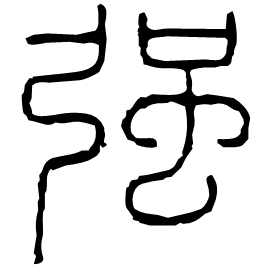
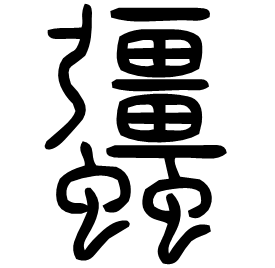
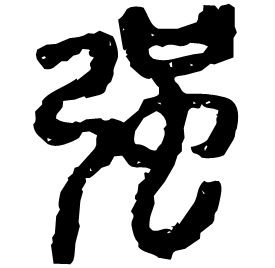
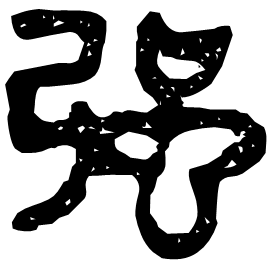
Phonosemantic component. 弓 represents the meaning and 畺 represents the sound. Originally written as 彊.
Components
Character Evolution

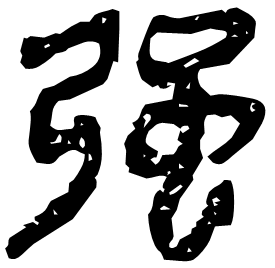

Component uses
Historical Pronunciations
| Middle Chinese | Old Chinese | Gloss | |
|---|---|---|---|
| Baxter-Sagart | gjang | N-kaŋ | strong |
| gjangX | m-kaŋʔ | make an effort |
說文解字
《說文》:“強,蚚也。从虫,弘聲。,籀文強,从从彊。”
Sources
- Character origin
- 漢語多功能字庫
- Readings & variants
- Unicode
- Historical pronunciations
- Baxter-Sagart
- Historical images
- Academia Sinica
- Etymology
- Shuowen Jiezi (說文解字)
Original meaning: stop; approach
Depicts one person (匕) carrying another person (尸) on their back. Based on the original meaning "stop; approach". The current meaning is a phonetic loan.
Components
Character Evolution
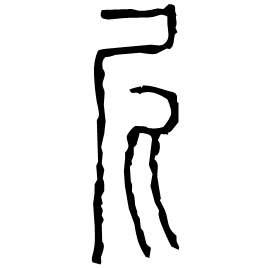

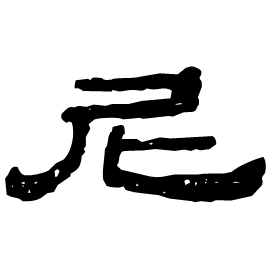
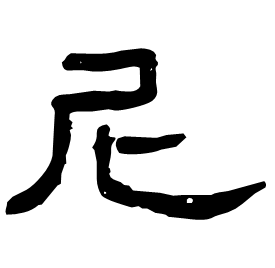

Component uses
Historical Pronunciations
| Middle Chinese | Old Chinese | Gloss | |
|---|---|---|---|
| Baxter-Sagart | nejX | nˤərʔ | to stop |
| nejH | nˤərʔ-s | to stop, obstruct | |
| nrij | nr[əj] | near, close |
說文解字
《說文》:“尼,從後近之。从尸,匕聲。”
Sources
- Character origin
- 季旭昇《說文新證》p.675-676
- Readings & variants
- Unicode
- Historical pronunciations
- Baxter-Sagart
- Historical images
- Academia Sinica
- Etymology
- Shuowen Jiezi (說文解字)
Traditional
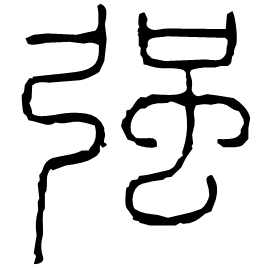
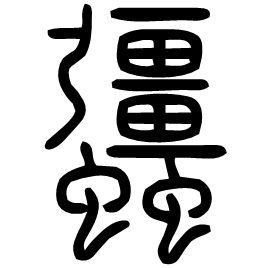
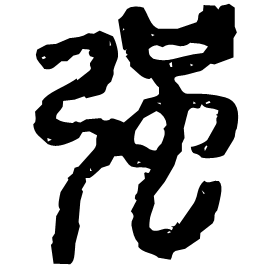
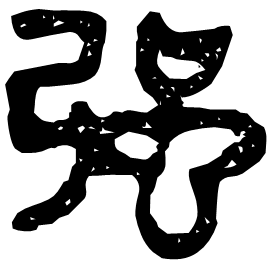
Phonosemantic component. 弓 represents the meaning and 畺 represents the sound. Originally written as 彊.
Components
Character Evolution

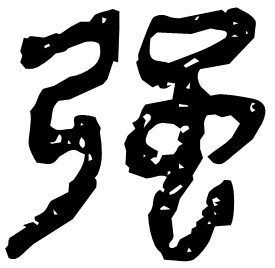

Historical Pronunciations
| Middle Chinese | Old Chinese | |
|---|---|---|
| Zhengzhang | ɡaŋ | |
| ɡaŋʔ | ||
| Unicode | ghiɑng | |
| ghiǎng |
說文解字
《說文》:“強,蚚也。从虫,弘聲。,籀文強,从从彊。”
Sources
- Character origin
- 漢語多功能字庫
- Readings & variants
- Unicode
- Historical pronunciations
- Zhengzhang Shangfang
- Historical images
- Academia Sinica
- Etymology
- Shuowen Jiezi (說文解字)