
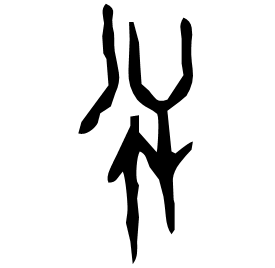
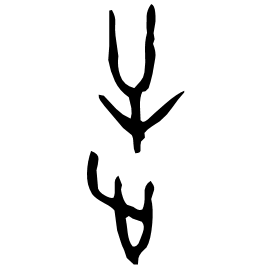
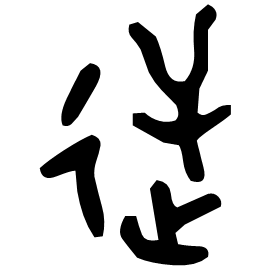
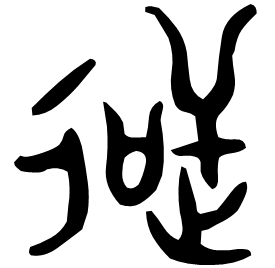
Originally written as 屰, a pictograph of an upside-down person. The 辶 (walk) component was added later, representing a person walking in the wrong direction.
Components
Character Evolution


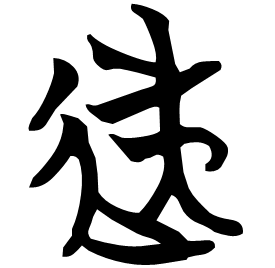
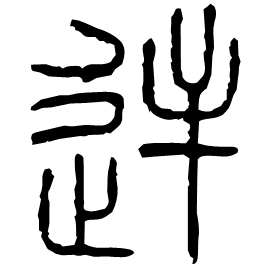

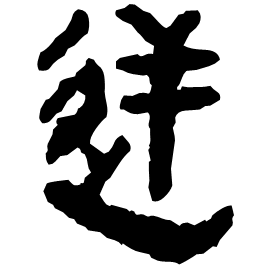
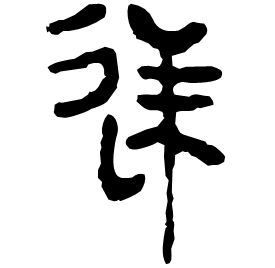
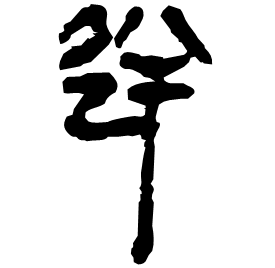
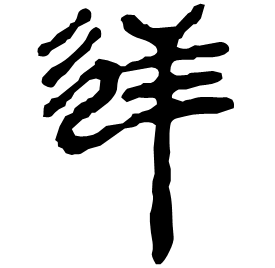
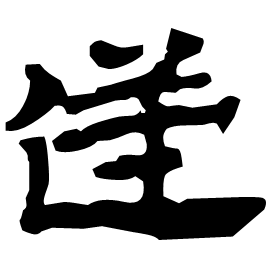
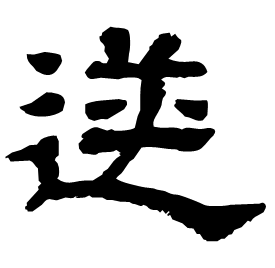

Historical Pronunciations
| Middle Chinese | Old Chinese | Gloss | |
|---|---|---|---|
| Baxter-Sagart | ngjaek | ŋrak | go against |
說文解字
《說文》:“逆,迎也。从辵,屰聲。關東曰逆,關西曰迎。”
Sources
- Character origin
- 季旭昇《說文新證》p.147-148漢語多功能字庫
- Readings & variants
- Unicode
- Historical pronunciations
- Baxter-Sagart
- Historical images
- Academia Sinica
- Etymology
- Shuowen Jiezi (說文解字)
Components
Character Evolution


Historical Pronunciations
| Middle Chinese | Old Chinese | |
|---|---|---|
| Zhengzhang | lja | |
| laː | ||
| Unicode | zia |
說文解字
杼也。从斗余聲。讀若荼。
Sources
- Readings & variants
- Unicode
- Historical pronunciations
- Zhengzhang Shangfang
- Historical images
- Academia Sinica
- Etymology
- Shuowen Jiezi (說文解字)