chā​kāi

to branch off

chā, chá, chǎ fork, prong

Depicts an object being held between fingers in the hand ().

Components

Iconic component
yòu hand
Iconic component
characterless component

Depicts something being held in the hand.


Character Evolution

Seal form
Seal Shuowen ~100 AD
Regular Modern

Component uses

Sound (0 of 6 verified)

Meaning (0 of 4 verified)

Historical Pronunciations

Old Chinese
Zhengzhangsʰraːl
sʰreːl

說文解字

《說文》:“叉,手指相錯也。从又,象叉之形。”

Sources

Character origin
漢語多功能字庫
Readings & variants
Unicode
Historical pronunciations
Zhengzhang Shangfang
Historical images
Academia Sinica

kāi open Simplified

Simplified form of . Pictograph of two hands () opening the bolt () on a door (). The traditional component was removed for simplification.

Components

Deleted component
mén, men door

The traditional component was removed for simplification.

Iconic component
characterless component

Depicts a bolt on a door.

Iconic component
gǒng two hands

Component uses

Sound (0 of 5 verified)

Meaning (0 of 2 verified)

Sources

Character origin
季旭昇《說文新證》p.836
Readings & variants
Unicode

kāi open Traditional

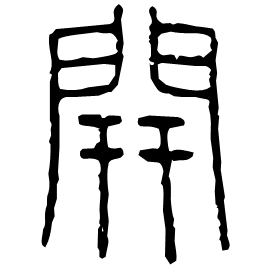
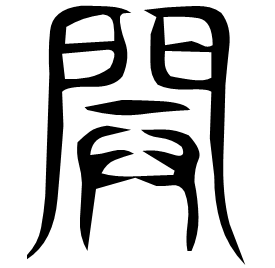
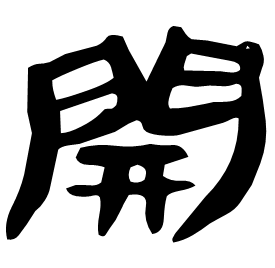
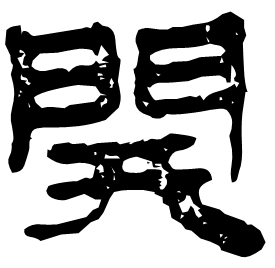
Pictograph of two hands () opening the bolt () on a door ().

Components

Iconic component
mén, men door
Iconic component
characterless component

Depicts a bolt on a door.

Iconic component
gǒng two hands

Character Evolution

Seal form
Seal Qin 221-206 BC
Seal form
Seal Shuowen ~100 AD
Seal form
Seal Shuowen ~100 AD
Clerical form
Clerical Qin 221-206 BC
Clerical form
Clerical Western Han 202 BC-9 AD
Clerical form
Clerical Eastern Han 25-220 AD
Regular Modern

Historical Pronunciations

Middle ChineseOld ChineseGloss
Baxter-SagartkhojNə-[k]ʰˤəj to open (v.i.)
khoj[k]ʰˤəj to open (v.t.)

說文解字

《說文》:“開,張也。从門,从幵。,古文開。”

Sources

Character origin
季旭昇《說文新證》p.836
Readings & variants
Unicode
Historical pronunciations
Baxter-Sagart
Historical images
Academia Sinica